The urban archipelago
I was recently trying to explain to someone what I felt was one of the biggest differences between the urban experiences of ‘proper’ cities like Sydney or Melbourne, and what we have here in quiet ol’ Adelaide.
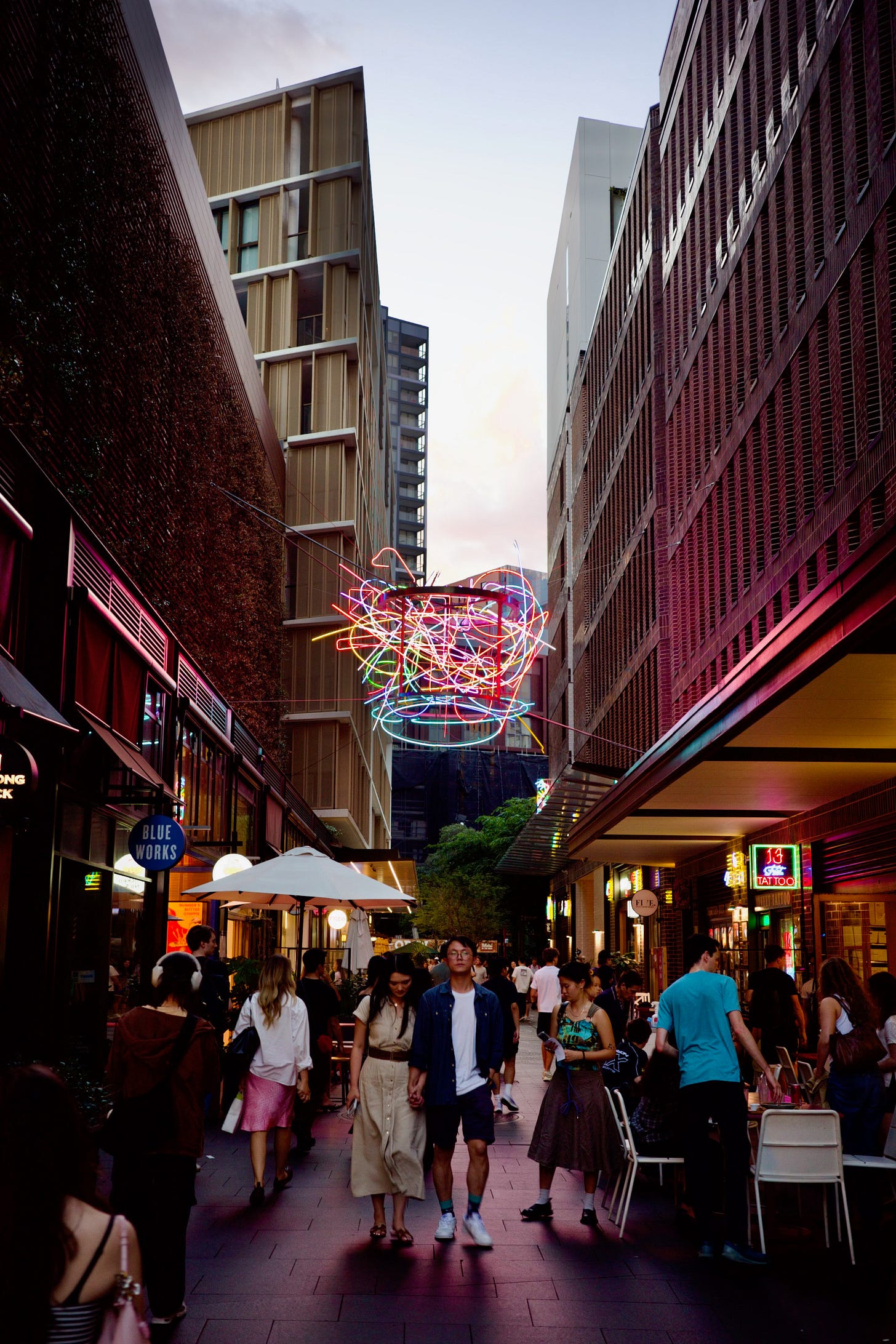
In Sydney, for example, the central city and its surrounding areas form a continuous experience of living, people centred places. I experienced this first-hand on a sunny late spring day last year, where we moved from cafe to shop to lunch to shop to cafe to dinner, deciding our next stop one destination at a time. We walked, took the bus, took the train - but not once did we check a timetable or go particularly out of our way to find a stop. There was a feeling of flow, of freedom, in the way we were able to move around the city. It’s a feeling that is hard to notice when it’s there and even more difficult to define afterwards - except, perhaps, in its absence.
Thanks for reading all over the place! Subscribe for free to receive new posts and support my work.
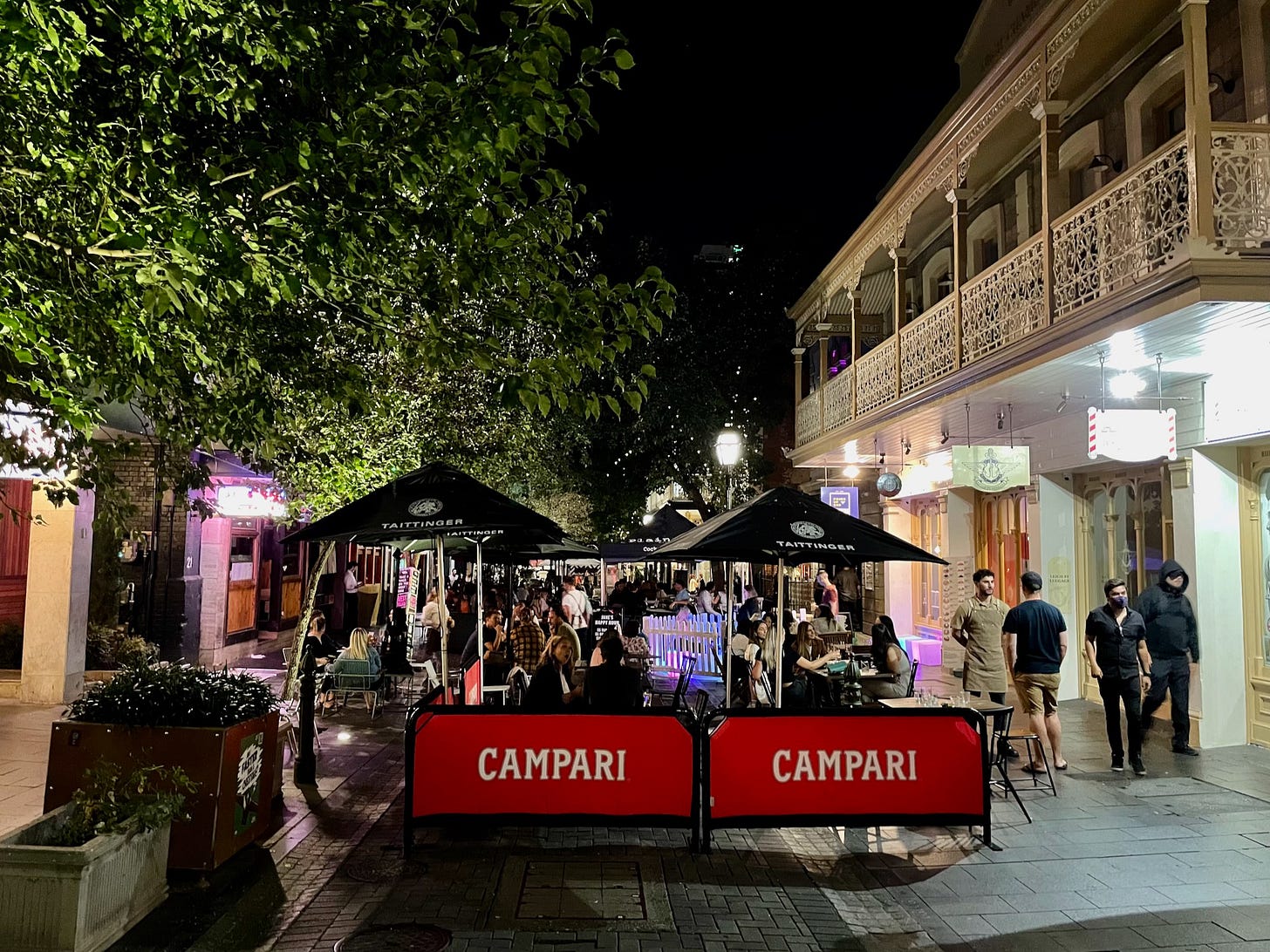
That brings me to Adelaide. Adelaide has good, people-centred places. In the city there’s the Rundle St - Hindley St corridor, parts of North Tce, or Gouger St in Chinatown. The inner-city suburbs of Prospect, Norwood, Bowden and Unley all have living main streets where you will find people out and about from morning to night. But these places, and I mean these places, are like islands in a sea*. A great distance separates any of the busy parts of the city from the inner-city main streets. All of them are too far and too unpleasant to walk to during the day, and involve crossing the dark parklands at night. To take a bus would be unreliable and involve significant down-time at the stop - if you are even near one. With very, very few exceptions, there are no train or tram stations that will take you where you want to go either.
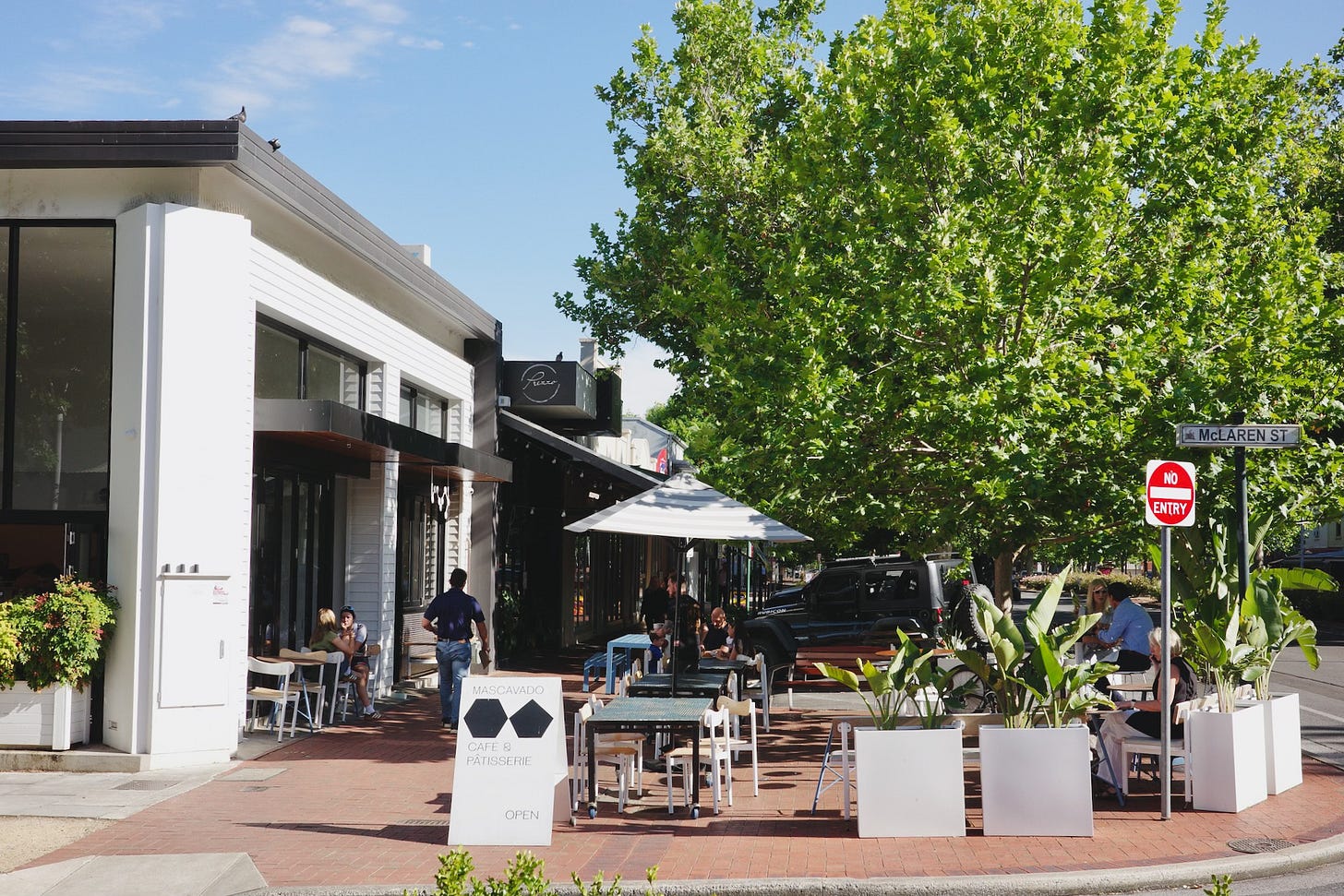
Even within the confines of Adelaide City itself, a channel separates the ‘mainland’ of Rundle St from the prosperous ‘island’ of Chinatown. It’s not physically far, but getting there involves walking through multiple quiet streets and crossing at intersections where you have to wait far too long as the priority is (stupidly) given to cars, not people. Other tiny islands of life do exist in the form of special cafes or stretches of otherwise desolate avenues - if you know where they are and how to get there.
And yet for lovers of people-centred places in Adelaide, there is a way. A way to traverse the sea of car-choked roads and too-quiet streets that separate the islands where life does exist. That way is, of course, the bicycle. Riding a bike allows you to travel from destination to destination in a reasonable time and in a way that is totally under your control. You don’t have to plan ahead with where to park or how to get there**. You can talk with your friends as you go and stop when and where you like. An evening in the city assisted by bike really does reach that state of ‘flow’ where itinerary stops merge and you can experience the city as a whole, on your terms. You feel part of the place you are in.
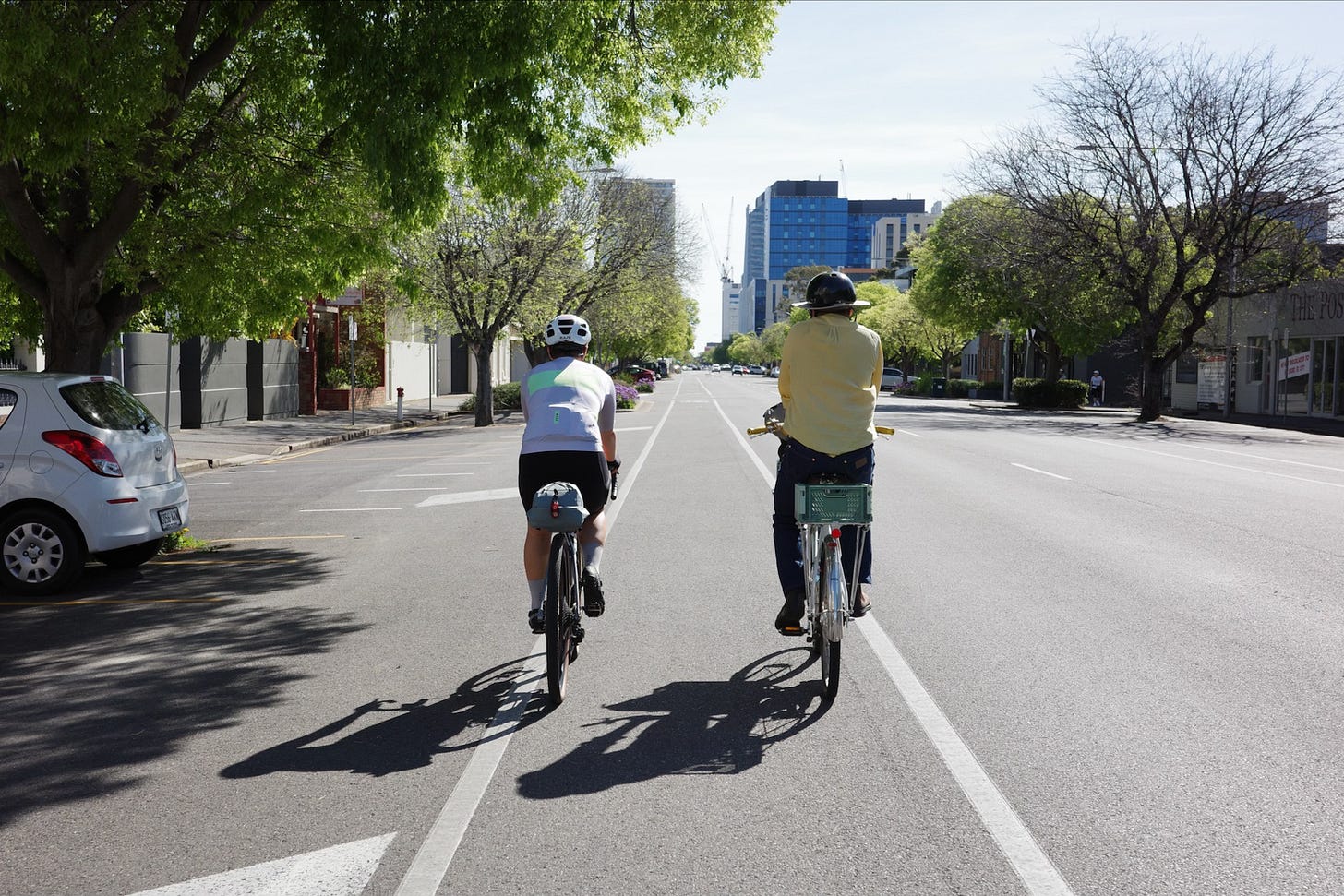
The hope for Adelaide lies in making it more possible for more people to have experiences like this. We need to provide more options to be able to walk or cycle to more places. We need more buses, trains and trams going to more places more often. The more these bridges are built, the busier the islands of the archipelago will be. In time, the islands themselves will grow larger and even merge, as we’ve seen in Sydney and elsewhere. It’s thought that fills me with hope, even if such a future may still be a long way off. In the meantime, I’ll keep riding my bike.
-
*The concept of the ‘urban archipelago’ is not mine, but dates back to a ‘70s proposal for revitalising a dwindling Berlin by Ungers, Koolhaas and others. It’s an interesting approach that I believe still has relevance today, especially to a place like Adelaide.
**This is only true if you are familiar with the safe and convenient routes by which you can get to places. Adelaide has a long way to go to make this part of cycling better.
Comments ()