The absurdity of our streets
“To children whose lives are threatened by traffic, and to all those who suffer noise, vibration, fumes, dirt, ugliness, loneliness, alienation or other impoverishments due to its presence.”
- Donald Appleyard, Livable Streets, 1981
I was listening to a podcast this morning as I scrubbed the bathrooms. My tactic is to combine something I dislike (scrubbing toilets) with something that gets me excited (podcasts on urbanism) to help the time pass quickly. The quote above, shared at the beginning of the episode, fired me up right away as it neatly and poetically encapsulated something that I have been mulling over and wanting to express for a while now. That is, just how absurd the way we have constructed the majority of our public spaces (read: our streets) is.
This is a realisation that has been building within me for years. It started as a feeling, right around the time that I sold my car and started cycling everywhere: a discomfort, a confusion, a struggle with what it felt like to be out in the streets outside of a car. This feeling kept growing but remained formless. It was only until I repeatedly exposed myself to different ways of being that I was able to finally put a finger on what this was.
Two specific moments spring to mind:
September 2024. A crisp, early spring day. I was out on an adventure, cycling through the northeastern Adelaide Hills to a quiet town where I was meeting my wife for dinner. Most of the day was on extremely quiet dirt roads and trails. I rode in the middle of the road, enjoying the sound of the wind in the trees and birdsong, and spotting kangaroos and sheep. I could stop when I wanted. My mind was empty and calm.
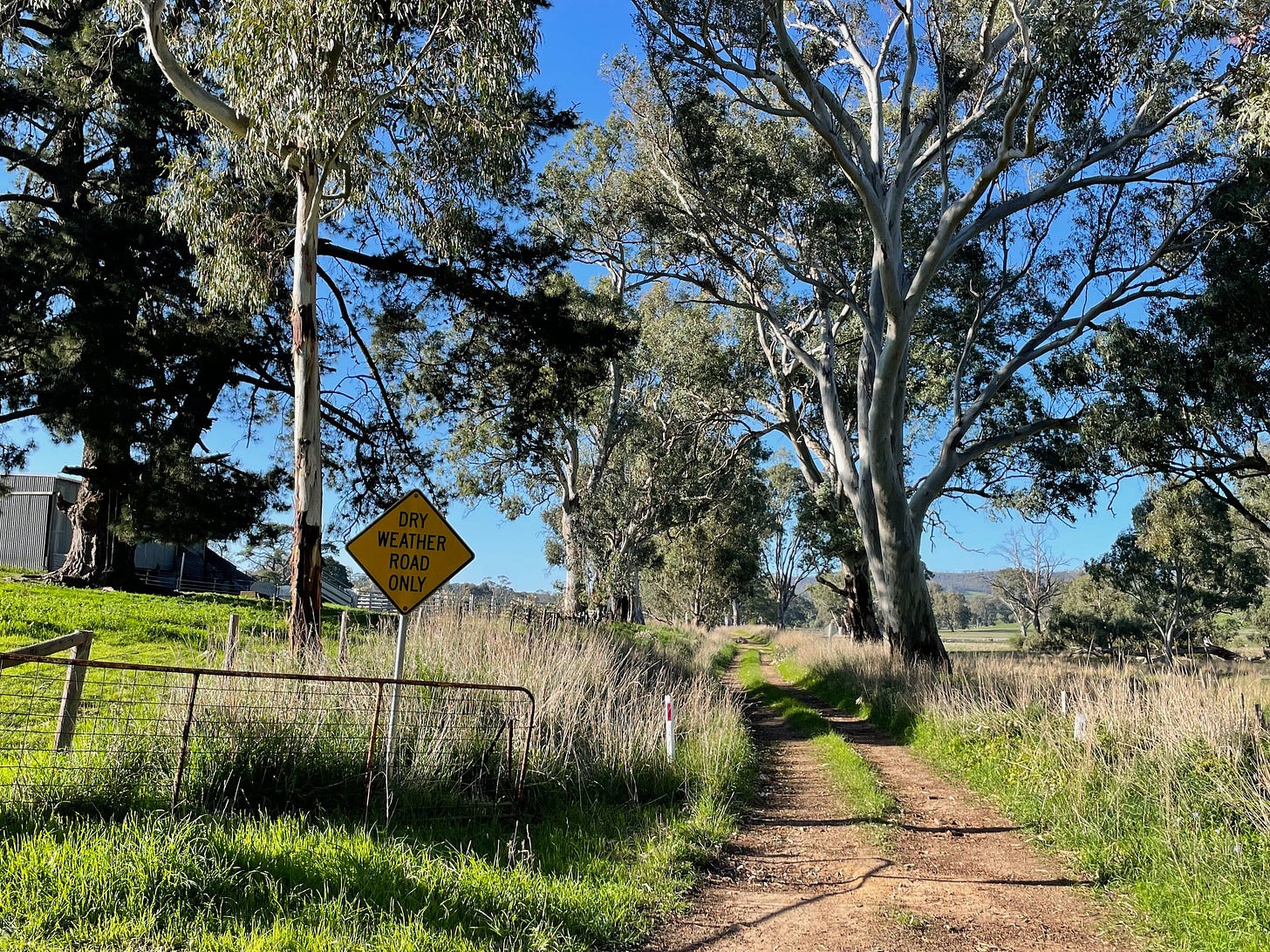
At some point I had to turn on to a relatively busy bitumen road to connect to the next section of quiet gravel. Lifted utes sped by me at 100km/hr. I was constantly on edge, hoping I could get past the next corner before I would hear the rush of tyres behind me again. Coming as it did immediately after such a deep period of quiet and mindfulness, this experience shocked me into realising just how violent our streets are. Because make no mistake, the streets of Adelaide are every bit (or more!) violent than what I was experiencing in the countryside. They aren’t a place you can toodle along absent-mindedly, stopping where you please. Every movement through our streets carries with it the real and present threat of death. It only doesn’t feel that way because we are so used both to it and the rituals we have to subject ourselves to reduce the risk.
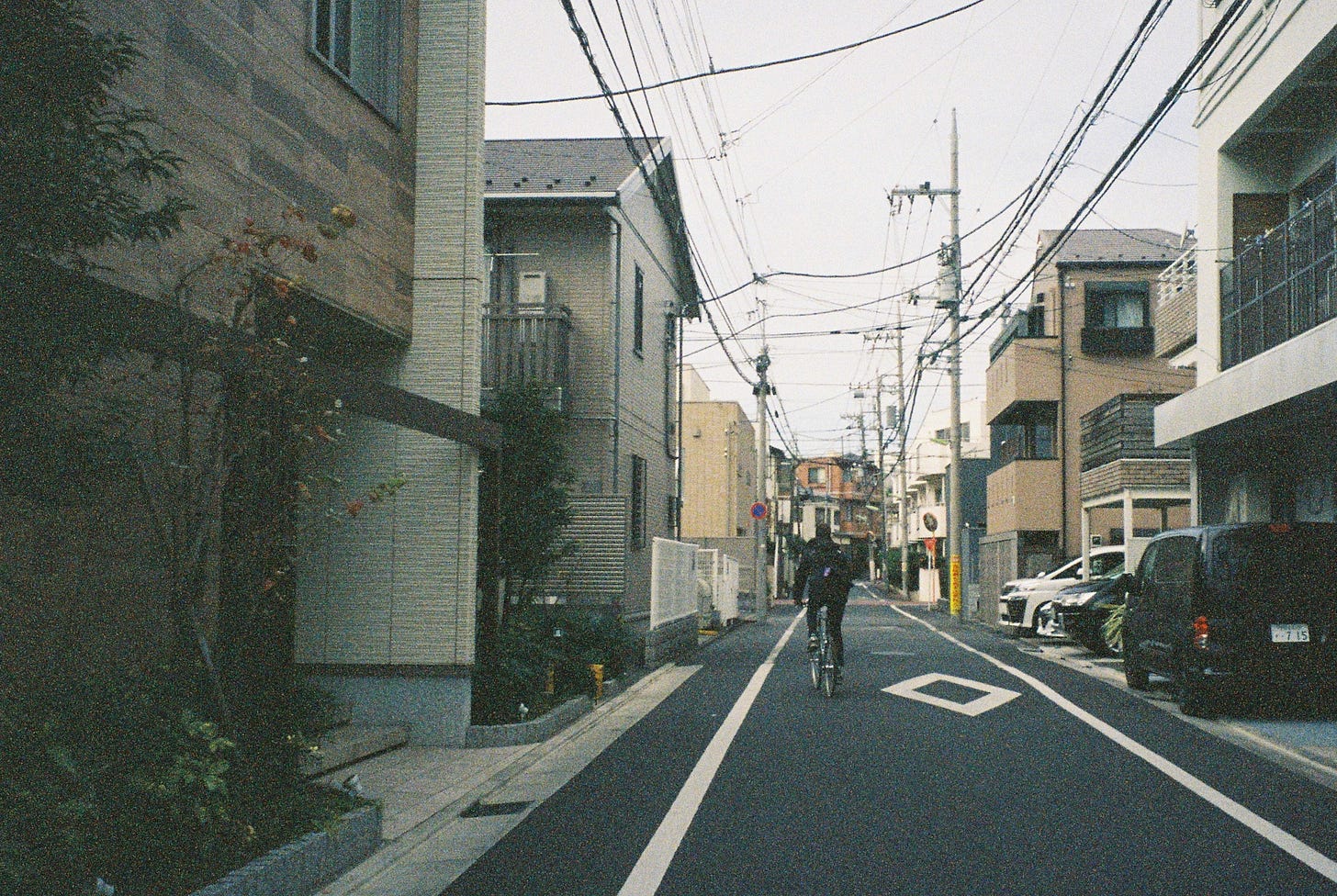
A few months after this ride, I found myself cycling through the streets of Tokyo. It’s one of the world’s biggest cities, and yet in Tokyo I found that same quiet and calm I had in the remote lanes of the Adelaide Hills. I realised that this feeling wasn’t about the city vs. the countryside like I had initially thought. No. This feeling was the difference between being in a place where people are prioritised versus a place set up first and foremost for cars. Thinking about this now, as I write this post, I have gleaned a further insight: if this feeling I had is experienced both in a remote, mostly-natural rural setting and the ‘concrete jungle’ of a large city, there is something fundamentally and perhaps primally correct or even natural about places like these. And, conversely, something deeply incorrrect and unnatural with places where cars are (to use the metaphor literally) king.
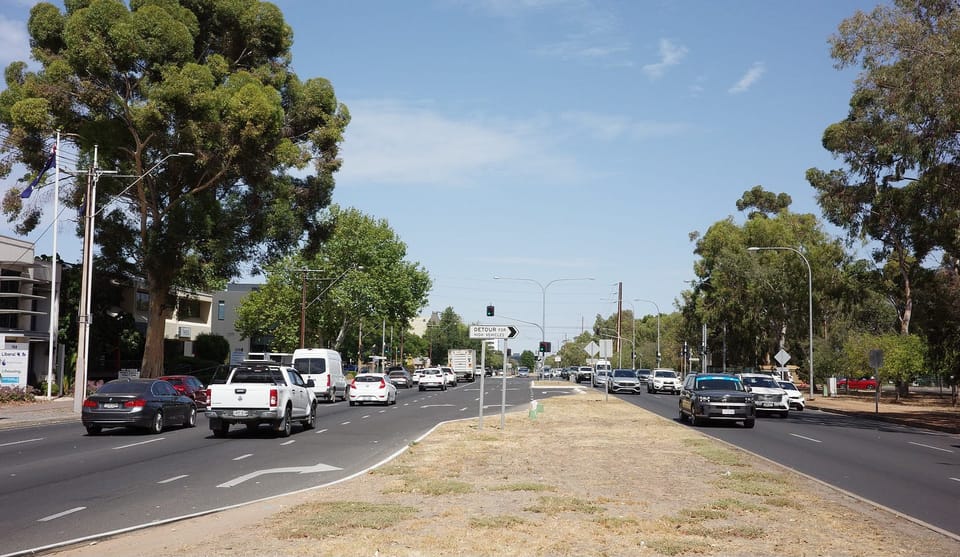
I’ll conclude this post with a third anecdote. The image at the beginning of this post is of a road that separates the area with the highest residential density in the whole of Adelaide with one of the largest stretches of parklands in the city. I cross this road on my bike every day. As I do, I have ample opportunity to observe and reflect. Every day I see people (mostly) alone in their metal cocoons. I see them lined up, not moving, metres apart from each other but totally alone. I see them change lanes suddenly, not knowing the incredible violence they bring to the world around them as they do. I hear the roar of their engine as they accelerate out of a u-turn straight at me just as I am trying to hurriedly cross through a gap that has finally opened up.
At times like these, I feel myself acutely out of the system. To borrow a metaphor, I have taken the orange pill and I cannot unsee how strange, absurd and grotesque this all is. As naieve and wistful as it sounds, why can’t we make it so that our streets are places we can stop and listen to the calling of the birds if we want to? Why are we continuing to make choices that subject ourselves and our children to the “noise, vibration, fumes, dirt, ugliness, loneliness, alienation and other impoverishments” of a society that does not allow for any realistic travel except by car? It’s absurd!
Comments ()