
Separated cycleways are actually for cars
The City of Unley is home to two of the best bikeways in Adelaide. While both are popular, safe and practical, these bikeways represent two very different responses to the question of how best to allow for cycling in our cities.
The Mike Turtur Bikeway runs along the Glenelg tram line and takes the form of a completely separated shared use path for much of its length. People on bikes can cycle in relative peace without having to worry about cars. Many people love bikeways like this because of the complete separation they provide from the dangers of cars.
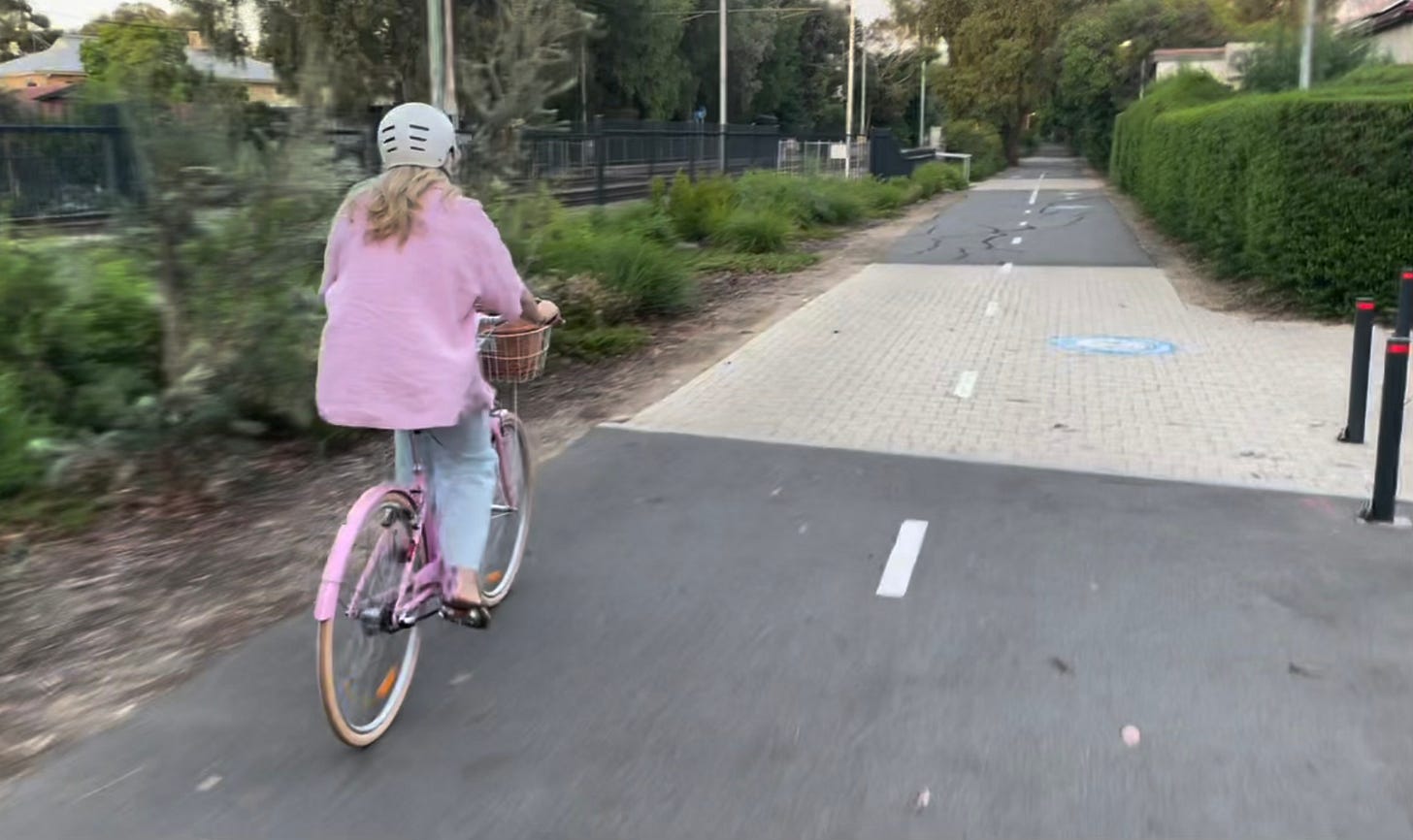
The Rugby-Porter Bikeway, on the other hand, doesn’t look much like a bikeway at first glance. It’s a route consisting of quiet, narrow suburban streets, much like any other in the surrounding area. Being public streets the space is shared with cars, and yet cycling along the bikeway is prioritised at every opportunity with measures such as right of way priority at most intersections and modal filters that allow people to walk and cycle, but not drive, along its length. The result is a quiet, low-traffic environment that is pleasant to cycle on, especially with a friend or in a larger group.
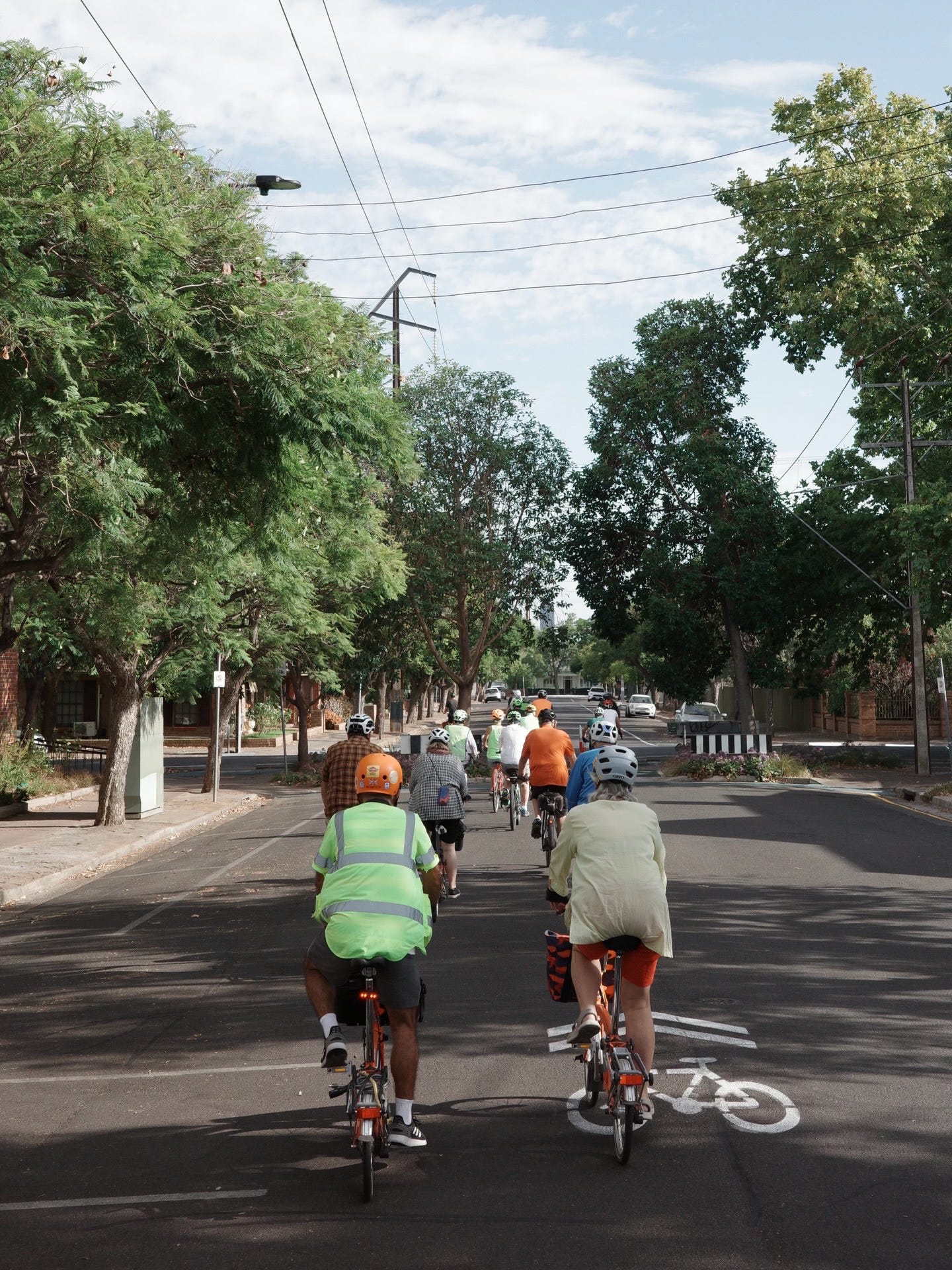
I’ve always preferred the Rugby-Porter bikeway and other bikeways like it that link together quiet, shared streets over dedicated, separated facilities like the Mike Turtur Bikeway. Initially, I thought this preference was because they are just more pleasant places to be on: I can cycle in a wide range of space near the middle of the street rather than focusing my attention on staying in the 1.5m of space allocated to me between the lines on a separated shared path. There’s room to pull over almost anywhere without worrying about getting in the way of others cycling behind me. And because there’s so much space, there’s almost no conflict with people walking, unlike on shared use paths.
But I knew there was something deeper to this unease I felt around separated cycleways that went beyond the mere visual or practical differences I have written about above. Then, last week, I chanced upon a paper written by Jennifer Bonham and Peter Cox that made explicit this inexplicable feeling I had been having. The paper is titled The disruptive traveller? A Foucauldian analysis of cycleways. As an architect and lover of architectural history/theory my ears pricked up immediately at the mention of Foucault, whose writings explore relations of power and control and who is frequently referenced in late 20th century architectural theory. What’s more, Jennifer Bonham is one of my local councillors, a fellow cycling activist and friend, and I was curious to read her take on this issue which I knew would be grounded in the local Adelaide context.
A quote from the abstract of the paper concisely illustrates the paper’s premise:
…the cycleway, by removing cyclists from road space, ultimately operates to maintain rather than challenge existing travel norms.
To paraphrase, separated bikeways are for cars as they move people on bikes away from the streets and out of sight. A hierarchy is established whereby cars have an inherently greater right to the street than someone cycling. More troubling, however, is that:
Segregation of cyclists onto cycleways echoes the exclusion of ‘abnormal’ bodies (e.g. the sick, the mad, the delinquent) discussed in Foucault’s genealogical works.
This is a counter-intuitive but powerful assertion. What Bonham and King are asserting is that the creation of separated cycling routes springs from and reinforces the very ‘cars vs bikes’ culture we seems to continually find ourselves in, whereby people on bikes are dismissed as abnormal/other/not worthy of time/money/safety.
Wow.
But it gets worse (for cyclists). Bonham and King even question the commonly-asserted justification of ‘safety’ as a reason for the creation of separated bikeways. As they argue, creation of a separated ‘safe’ place to ride immediately sets up all those who dare not to use this infrastructure as being recklessly unsafe. Why would you ride on a dangerous main road when there’s a separated bike path a block or two over? It’s your own fault if you get hurt! Insidiously, this framing also shifts attention away from what is the real cause of danger (to everyone) on our streets - yes, I’m talking about motor vehicle traffic - and on to the vulnerable road users themselves. To wit:
Paradoxically, the attempt to deal with inequalities that are inherent in the move to establish cycleways as special, protected-status spaces, results in reinforcing the cyclist and cycling as the ‘problem’… allowing existing road conditions and travel practiced to go unquestioned…stifling debate on changing travel practices and operating against the establishment of new travel norms”.
It’s a compelling line of reasoning and reading this paper has definitely been one of those ‘orange pill’ moments that forever changed the way that I see the world. Thanks Jennifer!
To take this back to the Rugby-Porter Bikeway: I like it so much because it lets people on bikes ride through the city itself without segregating them away, out of sight and out of mind. In doing so, it acknowledges cycling as a legitimate and valued choice for travelling in our cities. I think this is why it feels so good for me to ride on Rugby-Porter and other streets like it. It also sets up an alternative vision for how mobility might look on the streets of our future: people-first shared streets with low volumes of slow car traffic, not in isolated locations but as the norm, everywhere. Where cars are the things being separated away on dedicated infrastructure, not people.
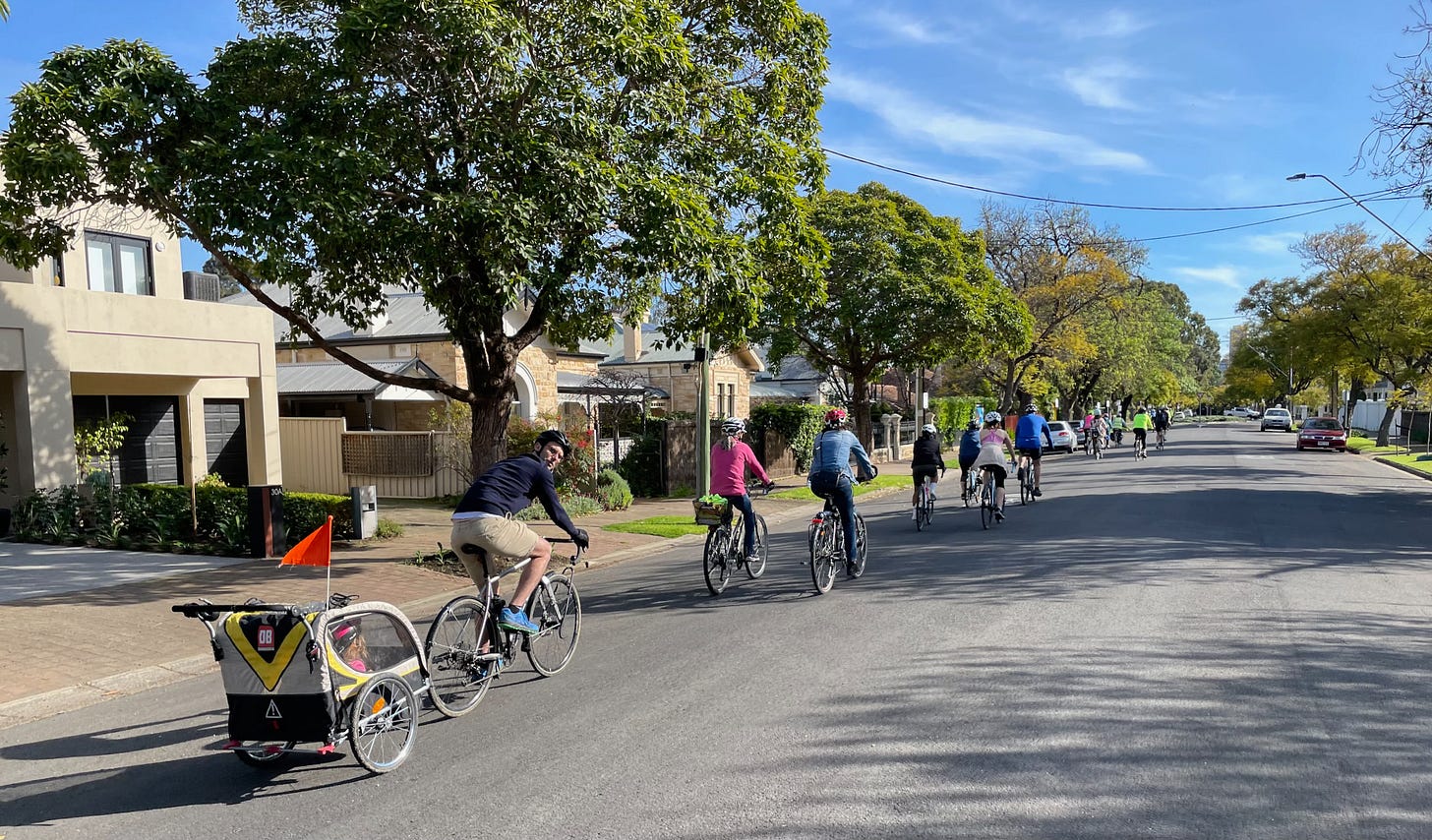
It’s funny. The cutting edge of cycling infrastructure in the Netherlands is to rip out separated cycleways and set up streets as shared spaces. Who would have thought we would have had a slice of that future under our very noses here in Adelaide!
Comments ()