
Cyclogeography
When people ask me about what kind of riding I do, I’m sometimes at a loss as to how to explain it. You see, I’m not what you would call ‘road bike’ rider, although I do ride my drop-bar road bike on roads. Nor am I a ‘mountain biker’, despite my growing love for taking my fat-tyred bike onto the dirt in the hills. In fact, if you pressed me as to what my favourite kind of riding is, it’d be of a sort that is hard to define with the language of the cycling world. I am talking about slow, meandering, exploratory rides through the suburbs, industrial areas and other seemingly ordinary places. Rides with a destination, or no destination. Rides where it’s often the parts where I’m not riding that are the most memorable.
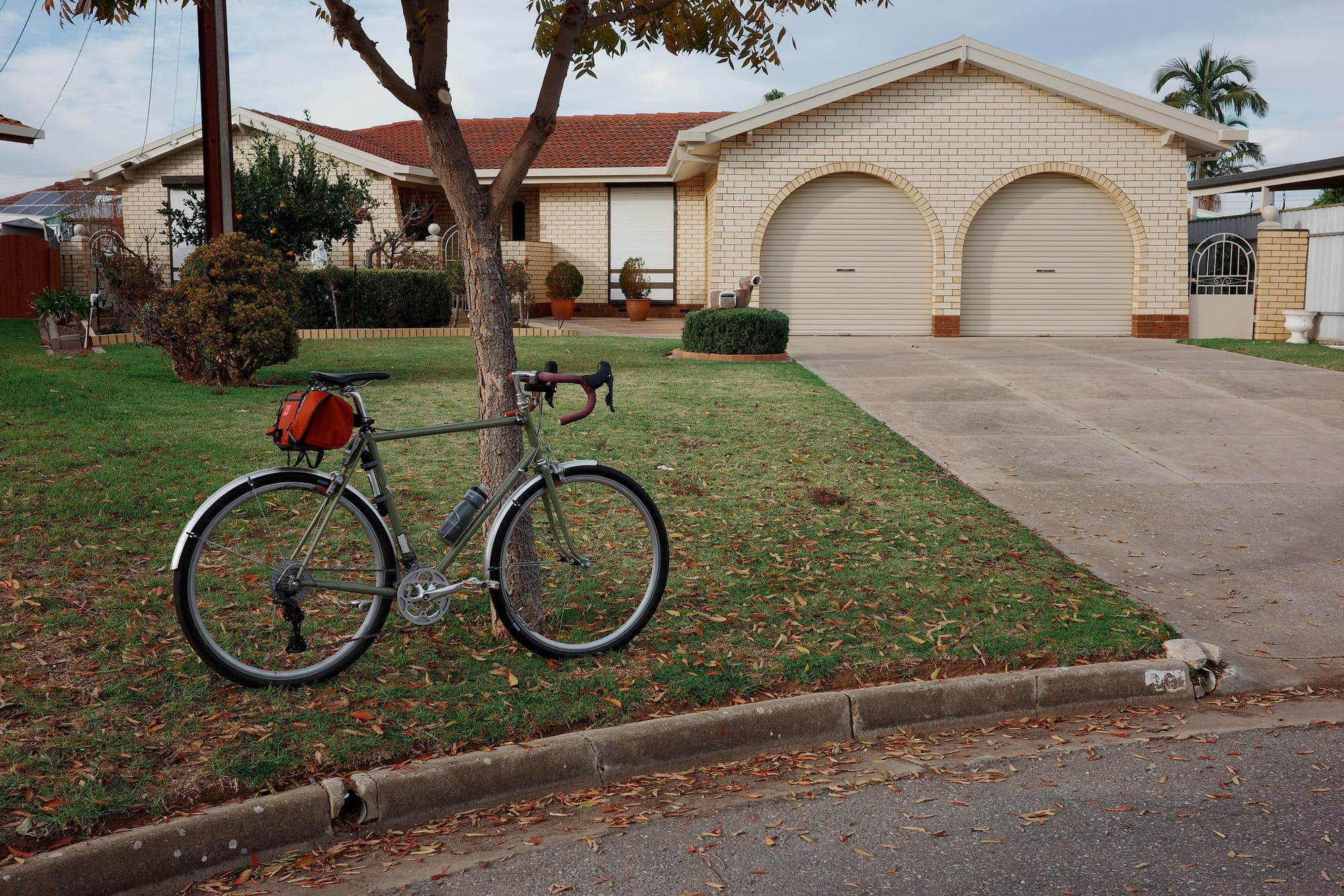
One word that comes close to describing my favourite kind of riding is the dérive. To go on a dérive is to move through a place, usually, urban, without goal or motive aside from being drawn by the attraction of that place and the encounters one finds there. It’s both letting go, and at the same time, cultivating a deep observation and search for understanding. Although typically undertaken by walking, when combined with the bicycle a dérive becomes something else. That difference comes from speed: on a bicycle, you have the speed to cover and therefore comprehend a larger area than if you were walking, but you are still slow enough that, unlike travel by car, you can observe and comprehend at a pace amendable to the workings of the human brain. Crucially too, a bicycle requires physical effort: you feel changes in gradient, wind and sun as you physically propel yourself through space. What we see is a product of howwe see, and how we see is a product of the activity we are undertaking1. On a bicycle, you ‘see’ a place not just with your eyes, but through a combination of all of your bodily senses. It’s no wonder that people like David Byrne proclaim that cycling is the best way to experience a new city.
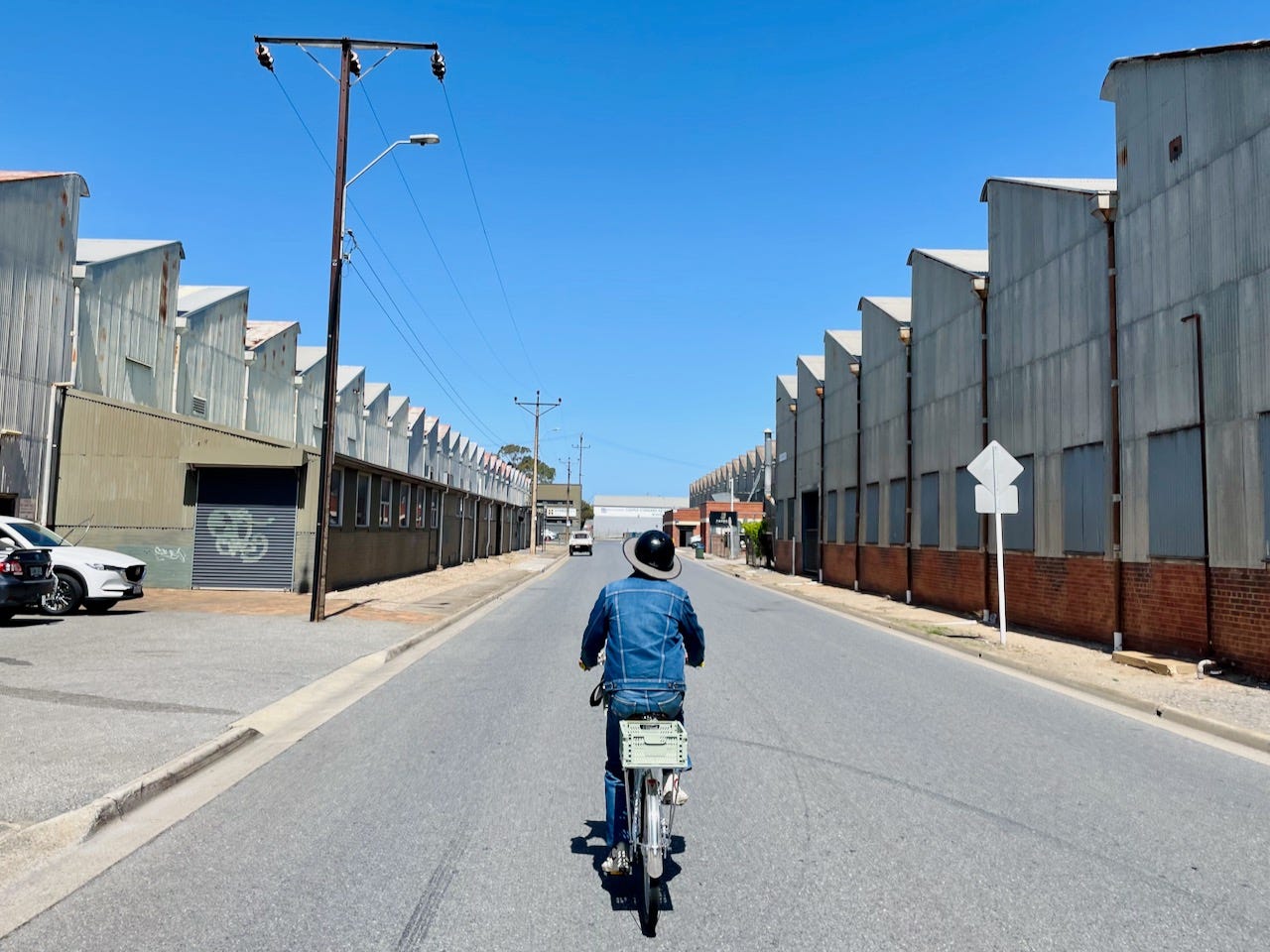
As it turns out, there are words to describe the kind of cycling I am referring to. They just come from places outside the mainstream cycling-as-a-sport consciousness we are used to here in Australia. One of these is cyclogeography. Initially a neologism coined by Jon Day in his autobiography of his time as a bike messenger, the word is both a portmanteau referring to ‘cycling’ through ‘geography’ and a reference to psychogeography, the radical practice born of twentieth-century revolutionary thought of which the dérive I mentioned earlier is a key technique. Am I, therefore and as Bikes, Books and Buildings proposes, a cyclogeographer?
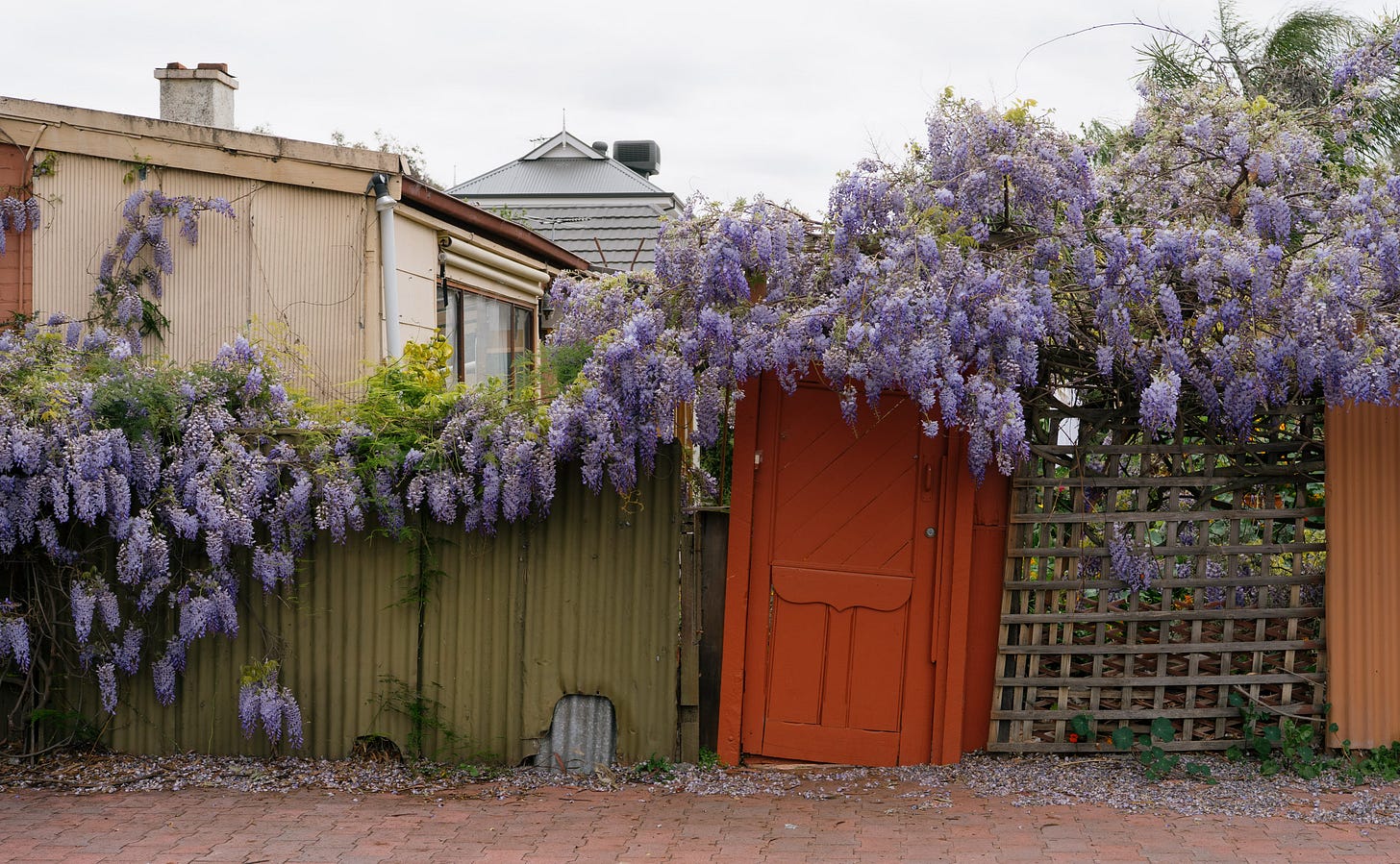
Another term I came across is the landseeër (no, that’s not a typo, there really are three ‘e’s). Appearing in cycle touring journals from the dawn of the bicycle in the late nineteenth century, the word draws on the connotations of the seer as someone with an ability for profound and penetrating observation and understanding. With their bicycle the landseeër awakens to their environs, often local, with a sense of anticipation and ability to observe from a fresh perspective.
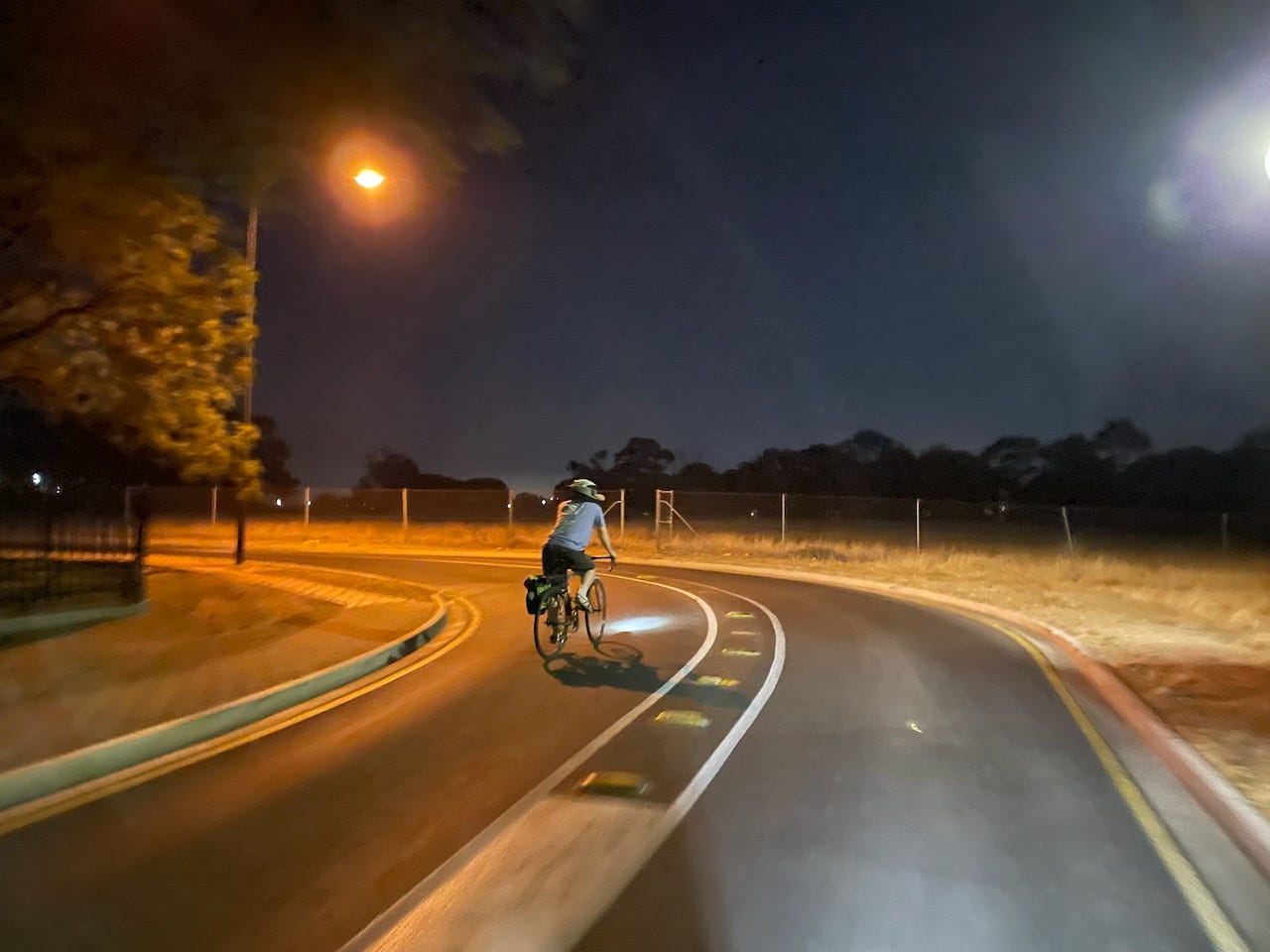
The interesting thing about both the cyclogeographer and the landseeër is that their explorations aren’t limited to distant, exotic cities or the remote wilderness. On the contrary, the power of this kind of riding is to be able to see the area in which you conduct your daily life in a totally different light. A suburb isn’t just the fog-of-warbetween two main roads you might drive along by car: it’s a rich tapestry of houses, streets, parks, footpaths, stobie poles, schools, people, plants, animals… etc. You wonder: why is there a river red gum in the middle of a street, seemingly distant from any watercourse? Who are the people whose laundry I can see fluttering from the balcony of a 60’s walk up? Why do I smell incence when I round the corner onto this particular street in the deepening twilight of a Sunday evening?
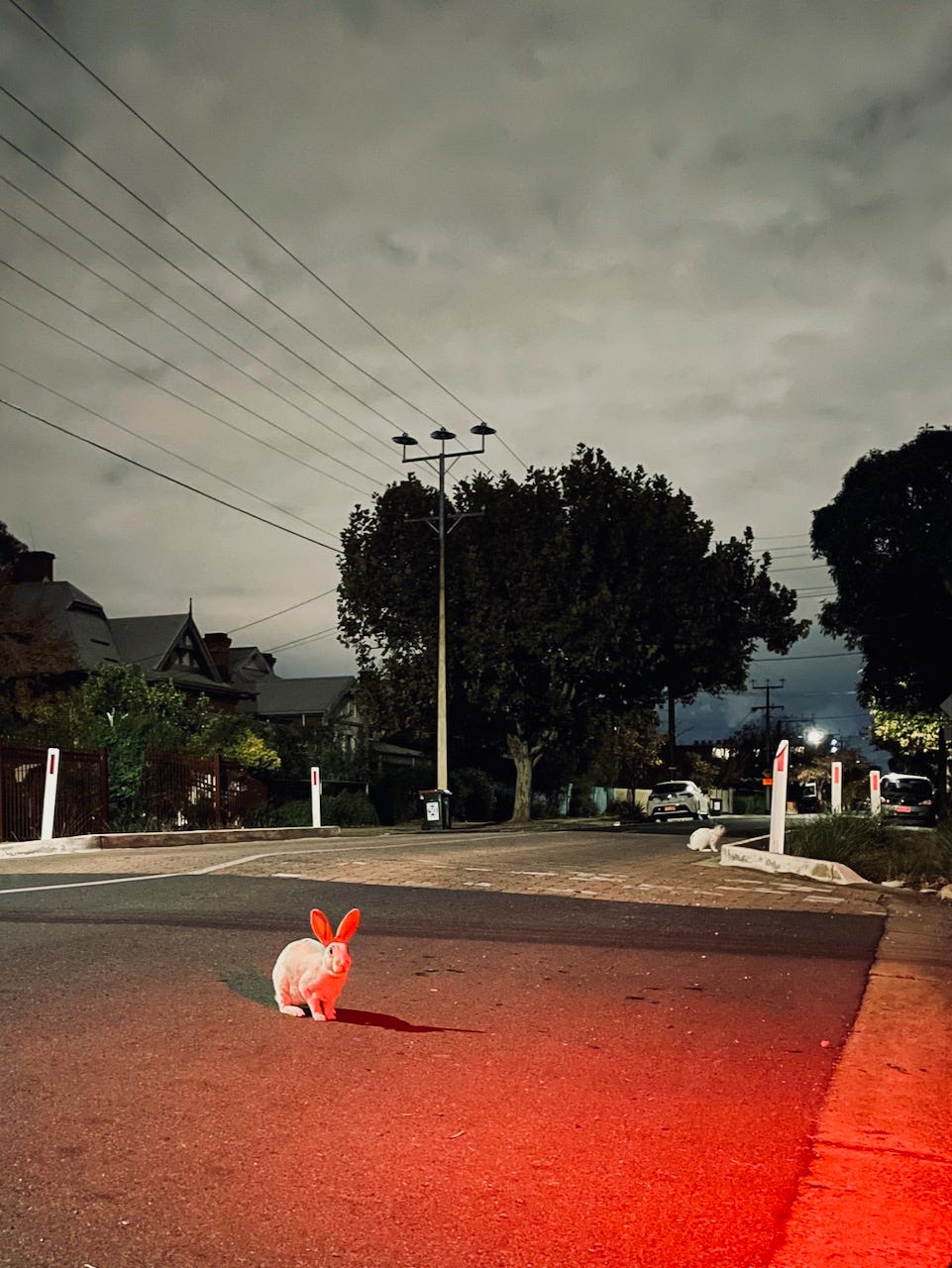
The radical power of the cyclogeographer’s dérive by bike is to disorient yourself from what you think you know or what you are told about a place, and by extension, its people. In doing so, you open space to take things as they actually are. In today’s world of walled gardens and filter-bubble-induced-polarisation, such an approach isn’t just escape, it is radical, perhaps even more so than when these ideas were first explored in the twentieth century.
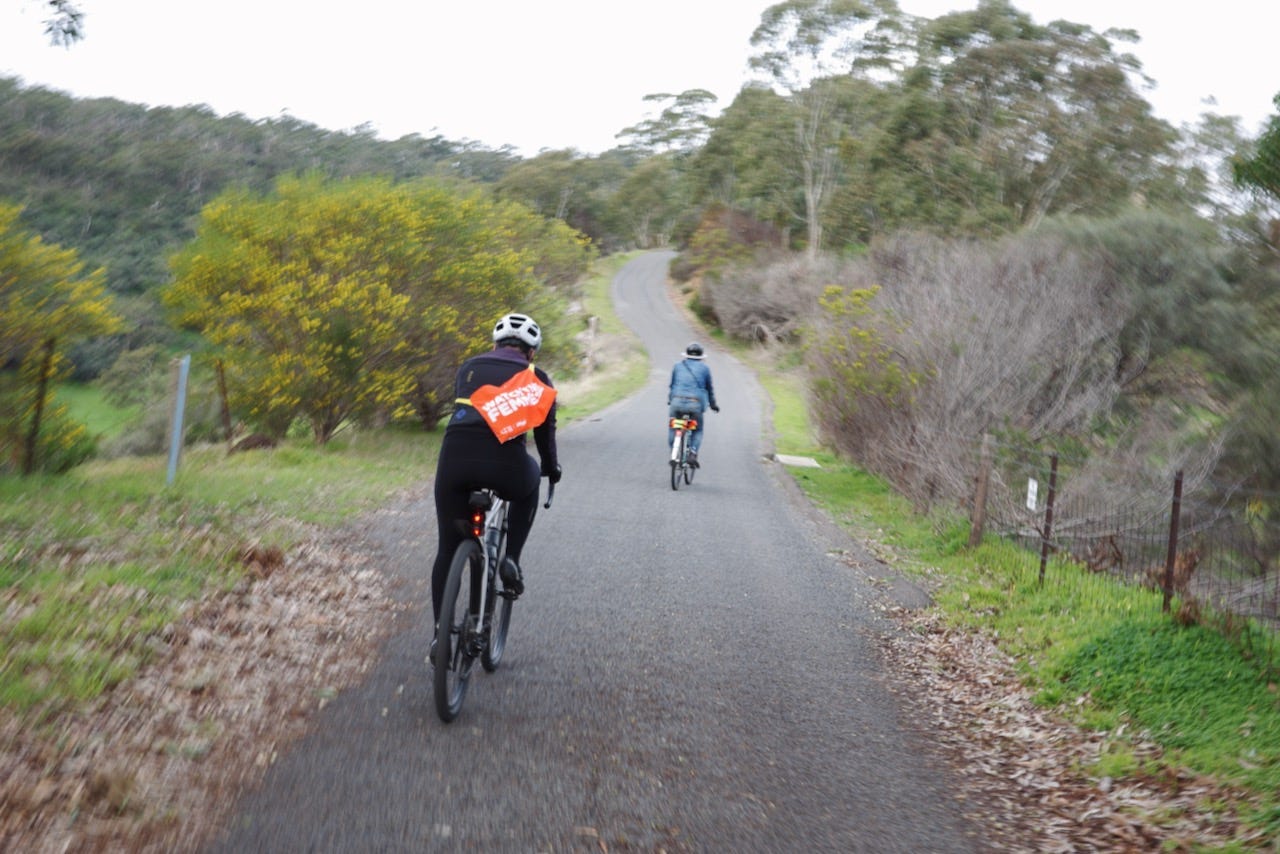
So when I am feeling anxious, down, or restless, I’ll go for a ride. I could be on my own, or it could be with a like-minded friend. There may or may not be a destination. Who knows what bike I will be on. The scenery probably won’t be glamourous. These are my favourite kinds of rides.
…
1 James Gibson, through Tim Ingold, through Justin Spinney
Comments ()